Skip to content
Perhaps the best-known treatment in Chinese medicine, acupuncture is used for a wide variety of health challenges and is one of the most studied medical treatments in the world.
If you are coming in for a painful condition—especially muscle or joint pain—acupuncture will very likely be part of your treatment plan. If you are coming in for a condition that is considered more “internal medicine,” then Chinese herbal medicine may also be part of your care.
In this context, internal medicine can include any acute or chronic condition that interferes with daily life, such as:
- Trouble sleeping
- Increased stress or anxiety
- Hormonal imbalance
- Digestive upset
- Fatigue
- Headaches or migraines
- Mood imbalance
- Immune support
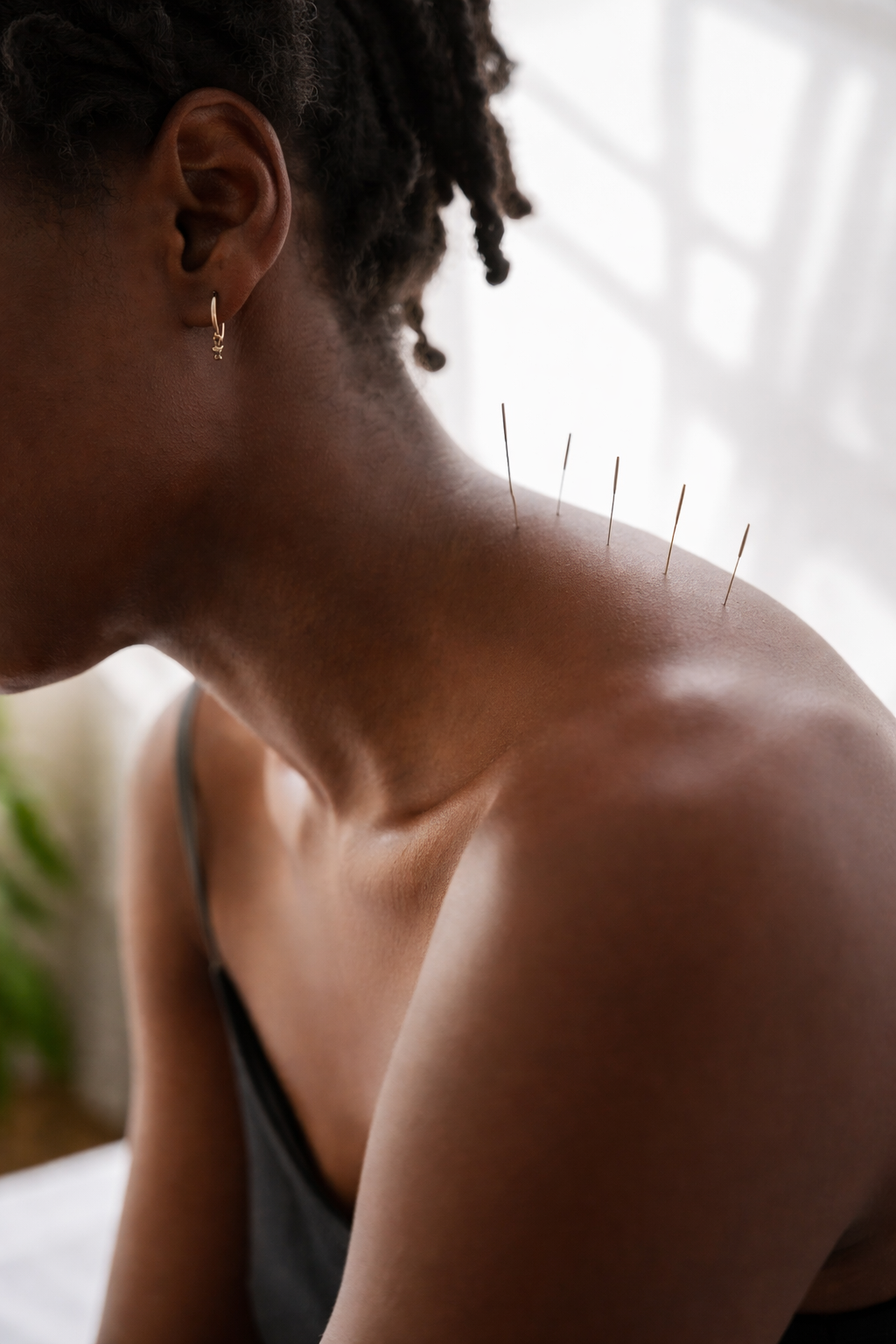
The first written record of acupuncture dates back over 2,000 years. Acupuncture involves the insertion of very thin, stainless steel, solid, single-use needles into specific points on the body. Needles come in various sizes and gauges, and the type used is chosen based on the area being treated and your comfort level.
What to Expect
Your initial visit will include a full medical intake, past health history, and questions based on Traditional Chinese Medicine theory. Your practitioner will create a customized diagnosis and treatment plan for you.
The practitioner may:
- Look at your tongue
- Read your pulse
- Observe your ears and eyes
- Palpate (gently check) areas of the body to refine the diagnosis
- Discuss dietary and lifestyle recommendations
During the treatment, most people feel deeply relaxed. You may notice sensations such as warmth, heaviness, tingling, or a gentle dull ache—this is normal and often a sign the points are responding.
After the treatment, it’s common to feel:
- Calm and relaxed
- Slightly tired (especially after the first few visits)
- Noticeably looser in the muscles
- Clearer mentally
- Occasionally a short “healing response” such as mild soreness, bruise or temporary symptom shifts
Go to Top