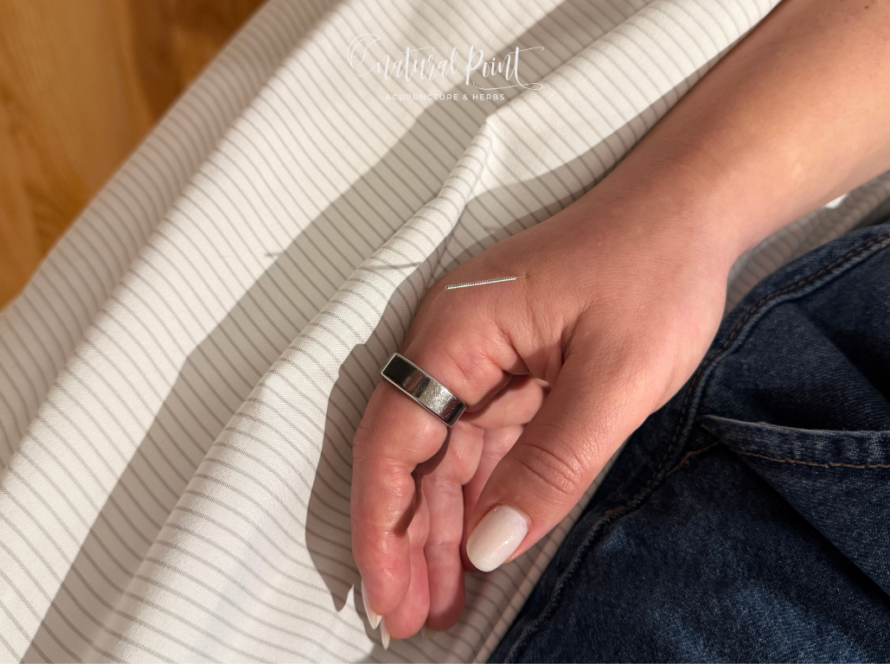
If you can’t reach behind your back to zip a dress, or lifting your arm overhead feels like it’s stuck in cement, you might be dealing with frozen shoulder — and if you’re in your 40s or 50s, you’re far from alone. I’ve noticed it comes up regularly in the perimenopause conversations happening everywhere right now, yet very few people actually understand how to treat it. Most just get told to wait it out, pop a pain killer or to try a cortisone shot and hope for the best.
I want to walk you through what frozen shoulder actually is, why it shows up so often during this stage of life, and why the Traditional Chinese Medicine (TCM) approach — one I use on patients in my Meyerland clinic every week — tends to get to the root of it instead of just quieting the symptoms.
What Is Frozen Shoulder, and Why Does It Show Up in Perimenopause?
Frozen shoulder, also called adhesive capsulitis, is a painful condition in which the capsule surrounding the shoulder joint becomes inflamed, thickened, and increasingly stiff. As the capsule tightens, both pain and restricted movement gradually worsen—sometimes to the point that lifting the arm, fastening a bra, styling the hair, or reaching behind the back becomes extremely difficult.
Frozen shoulder usually develops slowly. By the time many people realize that something more serious is happening, the shoulder may have already lost a significant amount of mobility.
I see this pattern frequently in women navigating perimenopause. Frozen shoulder is commonly discussed in perimenopause communities, but women are not always given a clear explanation of why it may be happening or what they can do about it.
Researchers are still studying the relationship between hormonal changes and frozen shoulder. Fluctuating and declining estrogen may influence inflammation, collagen, and connective-tissue health throughout the body, potentially making the shoulder capsule more vulnerable to irritation and stiffness. However, hormonal changes are probably only one part of the picture. Thyroid conditions, diabetes, previous shoulder injuries, surgery, and prolonged limitation of movement may also increase the risk.
The Three Stages of Frozen Shoulder
The Freezing Stage
During the freezing stage, pain is usually the most prominent symptom. Night pain may be especially severe, and the shoulder’s range of motion progressively decreases.
Treatment during this stage focuses on:
- Calming pain and inflammation
- Reducing protective muscle tension
- Maintaining comfortable movement
- Supporting sleep
- Avoiding aggressive stretching or forcing the shoulder
Trying to push through intense pain may aggravate an already sensitive joint and cause the surrounding muscles to guard even more.
The Frozen Stage
During the frozen stage, stiffness becomes the dominant complaint. Pain may begin to decrease, but everyday movements remain significantly restricted.
Treatment gradually places more emphasis on:
- Improving mobility
- Reducing muscular compensation
- Addressing tension in the neck, upper back, chest, and shoulder
- Restoring more comfortable movement patterns
The Thawing Stage
During the thawing stage, movement slowly begins to return. Treatment can gradually progress toward:
- Increasing range of motion
- Rebuilding strength
- Improving shoulder stability
- Restoring normal daily activities
- Preventing continued compensation through the neck and upper back
Why TCM Treatment Changes With Each Stage
Traditional Chinese medicine treatment is not based on a single frozen-shoulder protocol. The treatment changes according to the stage of the condition, the location of the pain, the channels involved, and the patient’s overall health pattern.
During the painful freezing stage, I may focus more heavily on distal acupuncture points that can reduce pain and improve movement without needling directly into an extremely sensitive shoulder. As the condition progresses, treatment may incorporate more local points and techniques to address stiffness, restricted mobility, and tension in the surrounding muscles.
TCM also considers factors beyond the shoulder itself, including sleep, digestion, stress, temperature sensitivity, energy levels, and hormonal changes. These details help me understand why one patient’s frozen shoulder may present very differently from another’s.
Treatment may include:
- Acupuncture
- Chinese herbal medicine
- Cupping or gua sha for surrounding muscular tension
- Gentle movement recommendations
- Coordination with physical therapy or orthopedic care
Chinese herbal medicine may also provide support between acupuncture sessions. Formulas are selected according to the individual patient’s presentation and may be used to support circulation, pain relief, sleep, inflammation, and overall recovery.
Combining acupuncture, herbal medicine, and appropriate rehabilitation may help reduce pain, improve function, and support more consistent progress throughout the recovery process. The goal is not simply to suppress pain temporarily. It is to help the patient move more comfortably, regain function, and create the best possible conditions for sustainable recovery.
Why Western Medicine Often Falls Short
If you’ve already been to a doctor about your frozen shoulder, chances are you were offered a cortisone injection. It can bring relief — but it’s temporary, and it doesn’t come free of downsides: the shot itself is often uncomfortable, and it treats the inflammation without addressing what’s actually driving the tightness and restriction in the first place. That’s why so many women find themselves back at the doctor a few months later, needing another round.
Physical therapy can genuinely help too, especially over time — but “over time” is the key phrase. Most people are told recovery will take months, sometimes a year or more, with no clear sense of if or when they’ll feel a difference.
Other approaches are taking anti-inflammatory medicine or being told to keep stretching. While these treatments can be appropriate and helpful, they fall short on the fact that they only treat the joint while overlooking pain sensitivity, muscle guarding, sleep disruption, stress and the patient’s broader constitutional presentation.
How TCM Treats Frozen Shoulder: Working the Whole Channel, Not Just the Shoulder
Here is where the Traditional Chinese medicine approach can look completely different—and it is one of the reasons I love treating frozen shoulder.
In Chinese medicine, we do not look only at the shoulder joint. We consider the location of the pain, which movements are restricted, the channels involved and what may be contributing to the condition throughout the body. The channels most commonly associated with the shoulder include the Stomach, Large Intestine, Small Intestine, San Jiao, Gallbladder, Lung and Heart channels.
Although local shoulder points may eventually be included, I often begin with distal acupuncture points rather than placing needles directly into an already painful and sensitive shoulder. After the consultation and movement assessment, I determine which channel pattern most closely matches the patient’s pain.
For many patients, I begin by examining the Stomach channel, which travels from the face, down the front of the body and into the lower leg. I palpate specific areas along the lower leg to locate tenderness, changes in the tissue or points that reproduce a sensation corresponding with the patient’s shoulder-pain pattern. These findings help guide the treatment rather than relying on the same predetermined points for every patient.
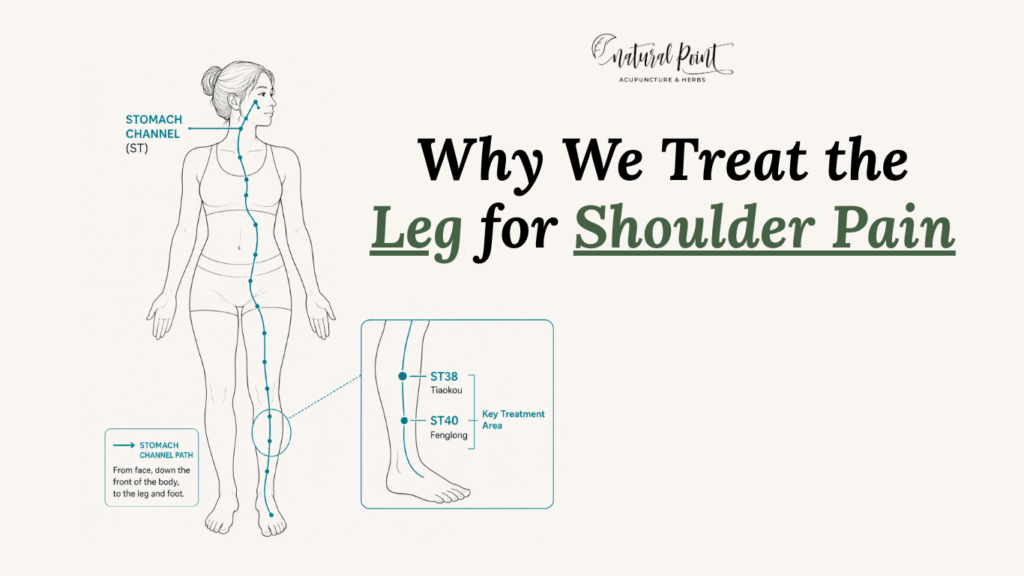
The sensitive areas on the leg may reflect the location or shape of the patient’s shoulder pain within the channel system. For example, when pain travels around the front and outer portion of the shoulder, I may find corresponding tender points along the opposite lower leg.
What makes this technique especially useful is that it allows us to test the treatment immediately. Before inserting the needle, I ask the patient to perform the movement that feels painful or restricted, such as lifting the arm overhead or reaching behind the back. After needling the selected distal point, we repeat the movement.
Patients are often surprised to discover that they can move farther, experience less pain or perform the movement more comfortably—even though none of the needles are placed near the shoulder. This immediate change does not mean that frozen shoulder has been completely resolved in one visit. The shoulder capsule still needs time to heal and regain movement. However, it provides valuable feedback that we have selected a point and channel that are influencing the patient’s symptoms.
Distal acupuncture can also make treatment much more comfortable. A frozen shoulder may already be extremely painful, especially during the early “freezing” stage. Beginning away from the affected joint allows us to reduce pain and protective muscle guarding without repeatedly aggravating the most sensitive area.
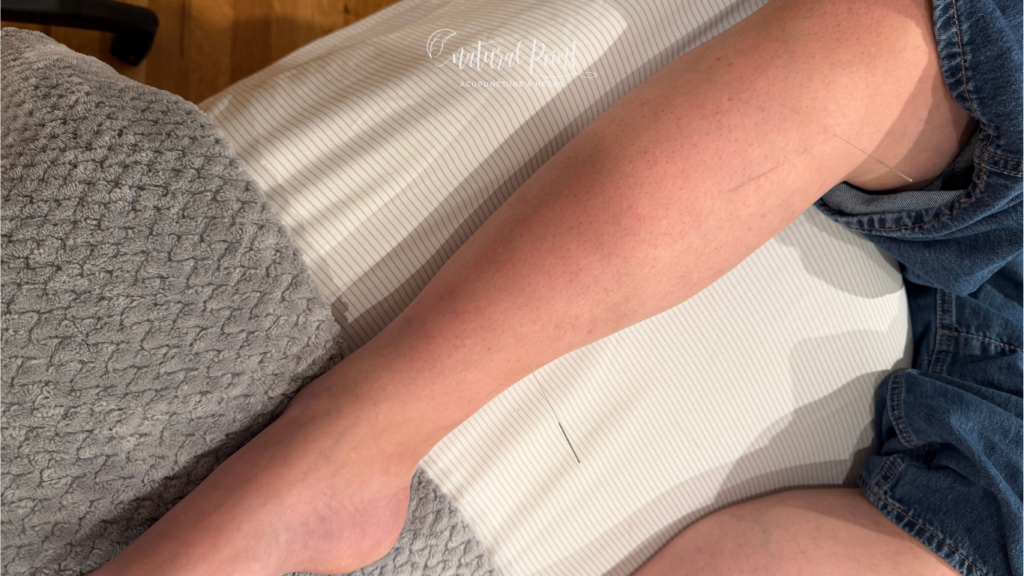
Acupuncture may help modulate pain signaling and make movement more tolerable. By reducing the protective muscle guarding we can address the neck, upper trapezius, deltoid, pectorals, rotator cuff and scapular muscles. As pain and guarding decrease, patients may be able to participate more comfortably in stretching and rehabilitation.
From a TCM perspective, treating the channel rather than only the painful joint also allows the treatment to be individualized according to the patient’s overall presentation. Two people with frozen shoulder may receive very different treatments. One patient may have significant digestive symptoms, another may struggle with poor sleep and stress, while another may experience cold sensitivity, inflammation or menopausal symptoms. These details help shape the treatment plan.
This is also where acupuncture differs from dry needling. Dry needling primarily focuses on muscular trigger points, tight bands of muscle and surrounding fascia. That approach may help relieve muscular pain and guarding. Acupuncture can address those local tissues as well, but a Traditional Chinese medicine treatment may also incorporate distal points, channel relationships, the opposite side of the body and the patient’s broader health pattern.
The goal is not simply to place a needle where it hurts. The goal is to reduce pain, improve movement, calm the body’s protective response and create better conditions for gradual recovery. Acupuncture can also be combined with appropriate stretching, physical therapy and medical care when needed.
What to Expect: A Realistic Timeline
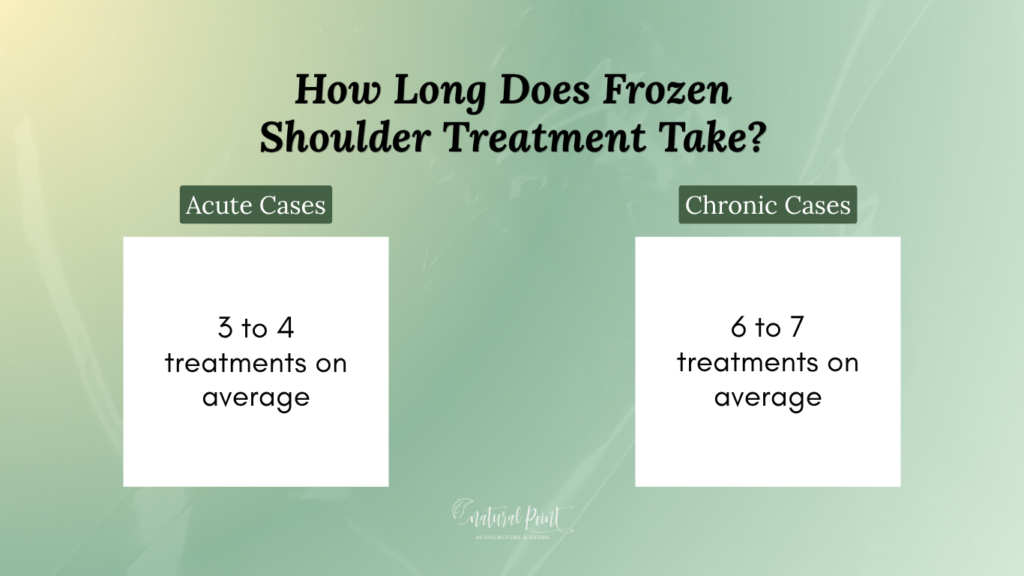
I always tell patients that the timeline depends on how long they’ve had the problem:
- Acute cases (more recent onset): typically 3–4 treatments on average
- Chronic cases (longer-standing, more restricted): typically 6–7 treatments on average
For chronic, longer-standing frozen shoulder, I usually recommend pairing acupuncture with a custom herbal formula. Acupuncture is what gives patients that immediate, motivating feedback — but for the deeper, more entrenched restriction, herbs work on resolving the underlying stagnation that’s kept the shoulder locked up in the first place. It’s the combination that tends to get people to lasting relief, not just short-term loosening.
Herbs will more likely be a part of the treatment if the patient also presents with:
- Significant inflammation
- Night pain
- Poor sleep
- Perimenopause or menopause symptoms
- Fatigue
- Digestive weakness
- Cold sensitivity
- Generalized stiffness
- Blood deficiency or poor recovery
- Chronic pain patterns.
Herbal formulas are selected according to the individual pattern and may be used to support circulation, comfort, sleep and overall recovery.
A Patient’s Journey
Terry came to me after living with frozen shoulder for six months. She could no longer reach overhead, sleep on the affected side, or fasten her bra without significant difficulty.
At her first session, Terry rated her pain a 7 out of 10. I explain this level of pain as discomfort that significantly interferes with daily activities, sleep, or basic needs.
During the treatment, I located sensitive points along her lower leg that corresponded with the pattern of pain in her shoulder. After needling those points, Terry immediately noticed an improvement in her range of motion. Her pain also decreased from a 7 out of 10 to a 5 out of 10 during that first visit.
Following the initial treatment, she reported that she felt calmer, slept better, and experienced less anxiety.
By her third treatment, Terry was able to fasten her bra again. She was also sleeping better each night, having daily bowel movements, and experiencing less allergy-related nasal drainage.
Terry completed a total of seven treatments. Because she was noticing improvements not only in her shoulder but also in several other areas of her health, she continued treatment to help prepare for an upcoming trip.
By the end of her treatment plan, her shoulder pain and restriction had resolved. She could return to her normal activities and move her shoulder comfortably again.
Just as importantly, Terry learned how to recognize the early signs of tension and discomfort before they became more limiting. Together, we created a realistic self-care plan that included a foam roller and a simple stretching routine for the morning and before bed.
She now enjoys practicing the routine, finds that it helps her body feel more comfortable, and says it also helps her fall asleep more easily.
Frozen Shoulder FAQs
Is frozen shoulder really connected to perimenopause?
Many women notice frozen shoulder emerging for the first time during perimenopause, a stage marked by hormonal shifts that affect connective tissue and inflammation throughout the body. If you’re dealing with shoulder stiffness alongside other perimenopause symptoms, you’re not imagining the connection.
How many acupuncture treatments does frozen shoulder need?
It depends on how long you’ve had it. Acute cases (more recent) typically need about 3–4 treatments, while chronic, longer-standing cases usually need 6–7 treatments on average.
Can acupuncture help if I’ve already tried a cortisone shot or physical therapy?
Yes. Acupuncture and herbal medicine can be used alongside — or after — other treatments. Many patients come to me after a cortisone shot wears off or PT plateaued, looking for something that addresses the root cause rather than just managing symptoms.
Does the treatment hurt?
The needling happens on the lower leg, not directly in the shoulder itself, so it’s typically well tolerated. Most patients are surprised by how quickly they feel a difference in their shoulder’s range of motion.
Ready to Get Your Shoulder Moving Again?
Frozen shoulder is not simply a tight muscle that needs to be forced open. It is a painful, progressive condition that affects the joint, surrounding muscles, sleep and daily life. Acupuncture and Chinese medicine provide an individualized way to reduce pain, address guarding and support the gradual restoration of movement—either independently or alongside physical therapy and medical care.
Book a free 15-minute consultation to talk through what’s going on with your shoulder and whether acupuncture and custom herbal medicine are a good fit for you.