Just when you thought Houston’s brutal summer was over, fall brings its own challenge: an overwhelming wave of allergies that can make September through November absolutely miserable. If you’re dealing with relentless sneezing, itchy eyes, sinus pressure, or that notorious Texas cedar fever, you’re far from alone.
Houston’s fall allergy season is particularly brutal thanks to our unique climate. Ragweed pollen peaks in September and October, while cedar fever – caused by mountain cedar trees releasing pollen – strikes in December and can last through February. Add in mold spores thriving in our humidity, and you’ve got a recipe for months of discomfort.
Many Houstonians reach for antihistamines and decongestants, only to find themselves drowsy, frustrated by diminishing effectiveness, or dealing with uncomfortable side effects. What if there was a natural approach that didn’t just mask symptoms but actually strengthened your body’s ability to handle allergens?
As a Licensed Acupuncturist in Houston who’s helped countless patients find relief from seasonal allergies, I’m excited to share how acupuncture and Traditional Chinese Medicine (TCM) can transform your fall allergy experience, naturally and effectively. Read more about surviving Houston’s Year-Round Allergy Season.
Understanding Houston’s Fall Energy Triggers
What Makes Fall Allergies in Houston So Intense?
Houston’s fall allergy season is particularly challenging due to several factors:
Ragweed Dominance (September-October) Ragweed is the primary culprit during early fall, with each plant producing up to one billion pollen grains per season. These microscopic particles travel hundreds of miles on the wind, meaning even if you don’t have ragweed in your yard, you’re still affected. Peak ragweed season typically hits in mid-September in Houston, right when we’re finally enjoying cooler temperatures and want to be outside.
Cedar Fever Season (Late Fall into Winter) Despite its name, cedar fever isn’t actually caused by cedar trees—it’s mountain cedar (Ashe juniper) that releases massive amounts of pollen starting in December. Texas is ground zero for cedar fever, and Houston residents feel the effects as pollen clouds drift in from the Hill Country. Symptoms can be so severe that many people mistake it for the flu.
Mold Spores Year-Round Houston’s humidity creates perfect conditions for mold growth, both indoors and outdoors. Fall rains and decaying leaves provide additional mold breeding grounds, making outdoor activities particularly problematic. Unlike pollen that has distinct seasons, mold can trigger symptoms any time, especially during Houston’s wet fall months.
The “Hidden” Allergens Don’t overlook other fall triggers, such as dust mites (thriving in our still-humid homes), cockroach droppings (a significant allergen in Houston’s climate), and pet dander (as animals spend more time indoors when the weather cools).

Common Fall Allergy Symptoms Houston Residents Experience
Fall allergies in Houston manifest in ways that can significantly disrupt your daily life:
Respiratory Symptoms
- Persistent sneezing fits, especially in the morning
- Runny or stuffy nose that won’t quit
- Post-nasal drip that causes throat irritation
- Coughing, particularly at night
- Difficulty breathing or chest tightness
- Sinus pressure and headaches that feel like a vice around your head
Eye and Facial Symptoms
- Itchy, watery, red eyes (allergic conjunctivitis)
- Swollen eyelids, especially upon waking
- Dark circles under the eyes from sinus congestion
- Facial pain and pressure, particularly around the nose and forehead
Systemic Effects
- Fatigue and exhaustion make it hard to get through the day
- Brain fog and difficulty concentrating at work
- Irritability and mood changes
- Poor sleep quality due to congestion
- Reduced sense of taste and smell
Cedar Fever Specific Symptoms
If you’re dealing with cedar fever specifically, you might also experience:
- Low-grade fever (hence the name “cedar fever”)
- Extreme fatigue
- Sore throat
- Body aches that mimic flu symptoms
These symptoms aren’t just annoying; they significantly impact work productivity, exercise routines, outdoor activities, and overall quality of life during what should be Houston’s most pleasant weather months.
Why Conventional Allergy Treatments Fall Short
If you’ve been managing fall allergies with over-the-counter medications, you’ve likely experienced the limitations of conventional treatments:
The Medication Cycle. Antihistamines like Benadryl, Claritin, or Zyrtec provide temporary relief but often cause drowsiness, dry mouth, and that frustrating “allergy medication hangover.” Decongestants can help initially but frequently lead to rebound congestion when you stop using them. You find yourself needing more medication, more frequently, just to feel somewhat normal.
Diminishing Returns. Many Houston residents report that their allergy medications seem less effective over time. Your body can build tolerance, requiring higher doses or switching between different medications to achieve the same relief you once got.
Side Effects That Impact Daily Life
- Drowsiness affecting work performance and safety (especially problematic if you drive)
- Dry mouth and throat that compounds allergy discomfort
- Difficulty sleeping or, conversely, sleeping too much
- Increased heart rate from some decongestants
- Mood changes and irritability
Addressing Symptoms, Not Causes. The fundamental problem with conventional approaches is that they only mask symptoms. They don’t strengthen your immune system or address why your body overreacts to allergens in the first place. It’s like putting a bandage on a wound without cleaning it – temporary relief without true healing.
The Cost Factor. Between over-the-counter medications, prescription treatments, doctor visits, and potentially allergy shots, the financial burden adds up quickly, especially when dealing with Houston’s nearly year-round allergy challenges.
The Traditional Chinese Medicine Perspective on Fall Allergies
Traditional Chinese Medicine offers a completely different understanding of allergies: one that explains why some people suffer while others don’t, and why symptoms can change from season to season.
Understanding Wei Qi: Your Defensive Shield. In TCM, we talk about Wei Qi (pronounced “way chee”), which is your body’s defensive energy that acts like an invisible shield protecting you from external threats. Think of Wei Qi as your immune system’s energetic component, circulating just beneath your skin’s surface to ward off pathogens, allergens, and environmental factors.
When your Wei Qi is strong and abundant, allergens simply bounce off. When it’s weak or compromised, allergens penetrate your defenses, triggering the symptoms you experience. This explains why you might handle allergies fine one year but struggle the next, or why symptoms worsen when you’re stressed or tired.
Wind: The Carrier of Fall Allergens. In TCM theory, Wind represents rapid, changing conditions that invade the body from the outside. Fall is considered the “Wind season,” and allergens literally ride on the wind into your system. Wind symptoms are characterized by their sudden onset and changing nature—exactly like allergy symptoms that appear quickly and fluctuate throughout the day.
Wind often enters through the back of the neck (which is why I always tell my patients to keep this area covered on windy days!). This is why you might notice allergy symptoms worsening after spending time outdoors on a breezy Houston fall day.
The Lung Connection. In TCM, fall is the season of the Lung, and the Lung is particularly vulnerable during this time. The Lung organ system in Chinese medicine is responsible for:
- Protecting the body’s surface (that Wei Qi we discussed)
- Controlling the opening and closing of pores
- Managing the nose and sense of smell
- Regulating breathing and immune response
When the Lung is weak, you’re more susceptible to fall allergies. Strengthening Lung Qi through acupuncture helps your body naturally resist allergens rather than overreacting to them.
How Acupuncture Treats Fall Allergies Naturally
Acupuncture offers a comprehensive approach to fall allergy relief that goes far beyond symptom suppression. Here’s how it works:
Regulating the Immune Response. Rather than blocking histamine release (like antihistamines do), acupuncture helps regulate your immune system’s response to allergens. Research shows that acupuncture can:
- Reduce inflammatory markers like IL-2, IL-6, and IL-10
- Modulate immune cells to prevent overreaction
- Balance the body’s histamine response naturally
- Decrease IgE antibodies (the allergic response trigger)
This means your body learns to respond appropriately to allergens rather than launching a full-scale immune attack every time you encounter pollen.
Strengthening Wei Qi. Specific acupuncture points boost your Wei Qi, creating a stronger defensive barrier. By targeting points along the Lung meridian and related channels, we enhance your body’s natural ability to repel external pathogens and allergens. Think of it as upgrading your immune system’s security system.
Reducing Inflammation Throughout the Body. Acupuncture is a powerful anti-inflammatory treatment. By inserting fine needles at strategic points, we trigger your body’s natural healing response, releasing endorphins and anti-inflammatory compounds that reduce swelling in your nasal passages, sinuses, and respiratory system.
Improving Nasal Airflow and Sinus Drainage. Specific points around the nose, face, and head directly improve sinus drainage and nasal airflow. Many patients experience immediate relief from congestion during their first treatment – it’s one of the most satisfying aspects of treating allergies with acupuncture!
The Science Behind the Needles. Modern research validates what TCM practitioners have known for centuries. A randomized controlled trial published in the Annals of Internal Medicine found that acupuncture significantly improved quality of life for allergic rhinitis patients compared to sham acupuncture or standard care alone. Patients experienced reduced symptoms and decreased reliance on antihistamines after just 8 weeks of treatment.
What Makes Acupuncture Different? Unlike medications that you need to take continuously, acupuncture creates lasting changes in your body’s response patterns. While you may need regular treatments during peak allergy seasons, many patients find they need fewer sessions over time as their immune system strengthens and learns to respond more appropriately to allergens.

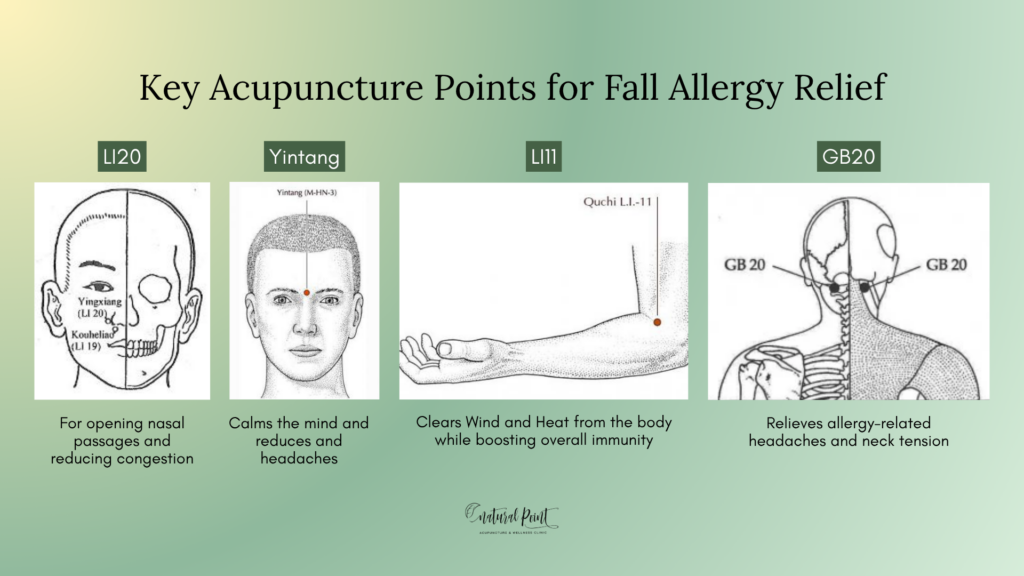
Key Acupuncture Points for Fall Allergy Relief
During your acupuncture session for fall allergies, I’ll use a combination of points specifically chosen for your symptoms and constitution. Here are some of the most effective points:
For Immediate Sinus and Nasal Relief
- LI20 (Welcome Fragrance): Located beside the nostrils, this point is my go-to for opening nasal passages and reducing congestion. You can even stimulate this point yourself between sessions by pressing firmly with your index finger.
- Yintang (Hall of Impression): Between your eyebrows, this point calms the mind while clearing sinus congestion and reducing facial pressure and headaches.
For Strengthening Immunity
- LI11 (Pool at the Crook): Found at your elbow crease, this powerful point clears Wind and Heat from the body while boosting overall immunity – perfect for Houston’s fall allergy challenges.
- ST36 (Leg Three Miles): Located below the knee, this is one of the most important points for building overall Qi and strengthening your body’s defensive energy.
For Respiratory Support
- LU7 (Broken Sequence): On the forearm near the wrist, this Lung meridian point directly strengthens respiratory function and helps your body expel allergens.
- BL13 (Lung Shu): On your upper back, this point directly tonifies Lung Qi and is especially effective for chronic respiratory issues.
For Headache and Eye Symptoms
- GB20 (Gates of Consciousness): At the base of your skull, these points relieve allergy-related headaches and neck tension while calming the nervous system.
Each treatment is customized based on your specific symptoms and how your body presents that day. Your treatment plan may also include complementary techniques like cupping, gua sha, or herbal recommendations.
What to Expect: Your Fall Allergy Acupuncture Journey
Your First Visit. During your initial consultation at Natural Point Acupuncture, we’ll discuss your complete health history, allergy triggers, symptom patterns, and treatment goals. I’ll also perform a TCM diagnosis, which includes looking at your tongue and taking your pulse. Both provide valuable information about your body’s internal balance.
Treatment Frequency for Fall Allergies. For acute fall allergy symptoms (you’re suffering now), I typically recommend:
- Week 1-3: Treatments 2 times per week to get symptoms under control quickly
- Week 4-6: Treatments 1 time per week as symptoms improve
- Maintenance: Monthly treatments or as-needed during peak allergy seasons
For preventive care (preparing for next allergy season), starting treatments 4-6 weeks before your typical symptom onset can significantly reduce severity.
What Happens During Treatment. Acupuncture sessions typically last 45-60 minutes. After placing the ultra-fine needles (most patients barely feel them), you’ll rest comfortably for 20-30 minutes while the needles work their magic. Many patients find the experience so relaxing that they fall asleep!
When You’ll Feel Results. Many patients experience some relief within the first 1-2 treatments – reduced congestion, clearer breathing, or decreased sneezing. However, the full benefits build over time as we strengthen your Wei Qi and rebalance your immune response. Think of it as training your body to respond differently to allergens.
Between Sessions. I’ll provide you with acupressure points you can stimulate at home, dietary recommendations specific to Houston’s fall season, and lifestyle modifications to maximize your results.
Complementary Approaches: Herbs, Diet and Lifestyle
Acupuncture works even better when combined with these supportive strategies:
Chinese Herbal Medicine for Fall Allergies. Customized herbal formulas can provide ongoing support between acupuncture sessions. Common formulas for fall allergies include:
- Bi Yan Pian (Nose Inflammation Pills): Excellent for nasal congestion and sinus pressure
- Yu Ping Feng San (Jade Windscreen Formula): Strengthens Wei Qi to prevent allergies before they start
- Xin Yi San: Specifically for sinus issues and headaches
I create personalized herbal recommendations based on your specific symptoms and constitution.
Houston-Specific Dietary Modifications
Foods to Minimize During Fall Allergy Season:
- Dairy products (increase mucus production)
- Sugar and processed foods (trigger inflammation)
- Spicy foods (if you have heat symptoms)
- Cold, raw foods (weaken digestion and Lung Qi)
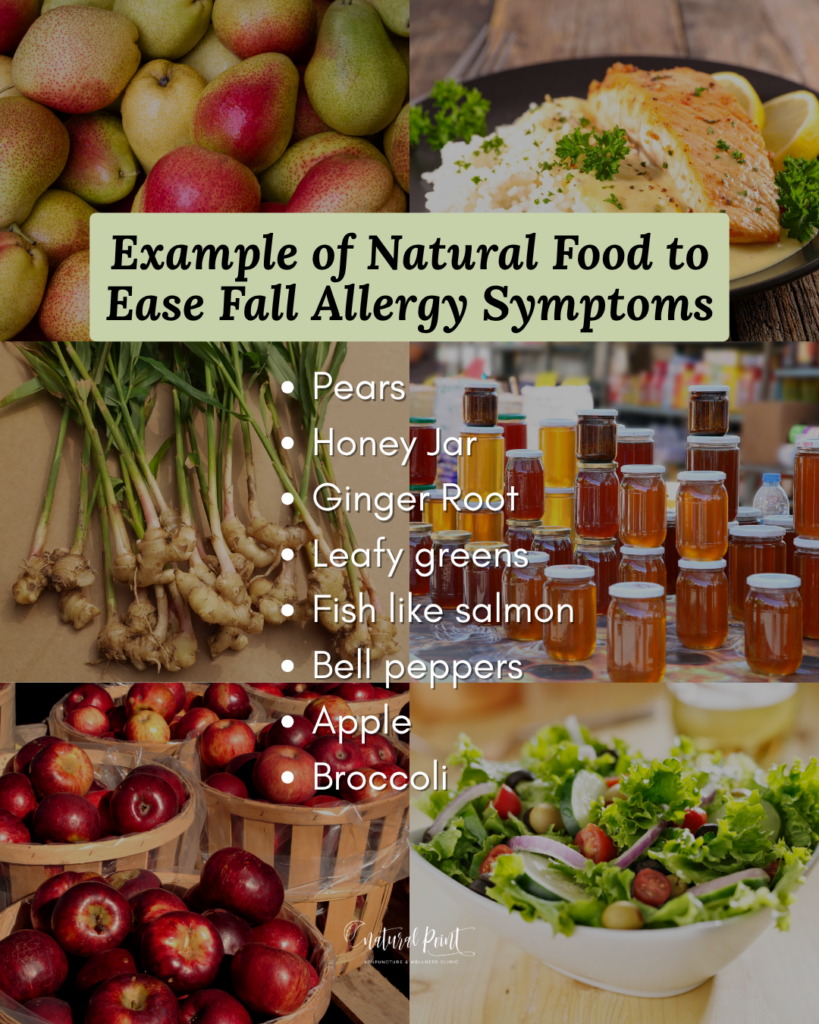
Foods to Include for Allergy Relief:
- Pears (moisten Lungs and reduce dryness)
- Honey (local Houston honey can help build tolerance – add to warm tea)
- Ginger and garlic (natural anti-inflammatories)
- Leafy greens (support overall immune function)
- Omega-3 rich fish (reduce inflammatory response)
- Warm, cooked foods (easier to digest, strengthening your Spleen)
Lifestyle Strategies for Houston Fall Allergies
Timing Your Outdoor Activities: Houston’s pollen counts peak between 5:00-10:00 AM. Plan outdoor exercise or yard work for late afternoon or evening when counts are lower.
Home Environment:
- Use HEPA filters in your home AC system
- Shower immediately after outdoor exposure to remove pollen from hair and skin
- Keep windows closed during peak pollen days
- Consider an air purifier in your bedroom
- Wash bedding weekly in hot water
Essential Oils and Steam: Eucalyptus, peppermint, and tea tree oils in a diffuser or steam inhalation can provide additional respiratory relief in Houston’s humid climate.
Acupuncture for Fall Allergies
How quickly does acupuncture work for fall allergies?
Many Houston patients notice some improvement after their very first treatment – reduced congestion, easier breathing, or fewer sneezing fits. However, acupuncture works cumulatively, meaning each treatment builds on the last. For best results with fall allergies, plan on 6-12 treatments over several weeks. The severity of your symptoms and how long you’ve been dealing with allergies affect the timeline; chronic allergy sufferers may need more initial treatments to reset their immune response. The good news? Once we get your symptoms under control, you’ll likely need fewer maintenance treatments to stay feeling great.
Can acupuncture help with cedar fever specifically?
Absolutely! Cedar fever is one of the most common complaints I treat in Houston, especially from December through February. Acupuncture is particularly effective for cedar fever because it addresses both the immediate symptoms (congestion, headache, fatigue) and strengthens your body’s ability to handle cedar pollen exposure. Many of my patients start preventive treatments in November before cedar season hits, which significantly reduces the severity of their symptoms. Even if you’re already suffering from cedar fever, acupuncture can provide relief—I’ve had patients come in barely able to breathe and leave with noticeably clearer sinuses.
Is it better to start acupuncture before or during allergy season?
Both approaches work, but starting before your symptoms hit gives you the best results. Ideally, begin acupuncture treatments 4-6 weeks before your typical allergy season starts—so late August or early September for Houston fall allergies. This preventive approach strengthens your Wei Qi and immune system before allergen exposure, often preventing symptoms from developing or significantly reducing their intensity. That said, it’s never too late to start! Even if you’re in the thick of allergy season and miserable, acupuncture can provide relief. I treat patients year-round, both for prevention and active symptom management.
Acupuncture for Fall Allergies: Final Thoughts
Houston’s fall allergy season doesn’t have to control your life. While antihistamines and decongestants might mask symptoms temporarily, acupuncture offers something better—a natural, effective approach that strengthens your body’s own defenses and creates lasting change in how you respond to allergens.
As a Houston acupuncturist who’s treated hundreds of allergy patients, I’ve seen firsthand how transformative this ancient medicine can be. Patients who’ve relied on medications for years find they can finally enjoy Houston’s beautiful fall weather without constantly reaching for tissues or dealing with drowsiness.
Whether you’re struggling with ragweed, preparing for cedar fever season, or simply tired of the medication cycle, acupuncture provides a drug-free path to relief.
Ready to breathe easier this fall? Book your consultation today, and let’s create a personalized treatment plan for your Houston fall allergy relief. Your sinuses will thank you!
Download your free acupressure guide for allergy relief.